Our History
Nestled in the heart of Volusia County, the Peabody Auditorium, Daytona Beach Oceanfront Bandshell and Oceanfront Park have been iconic landmarks for generations.
The Peabody Auditorium, with its rich legacy of music, dance, and cultural performances, has welcomed world-renowned artists and inspired local talent since its opening in 1949.
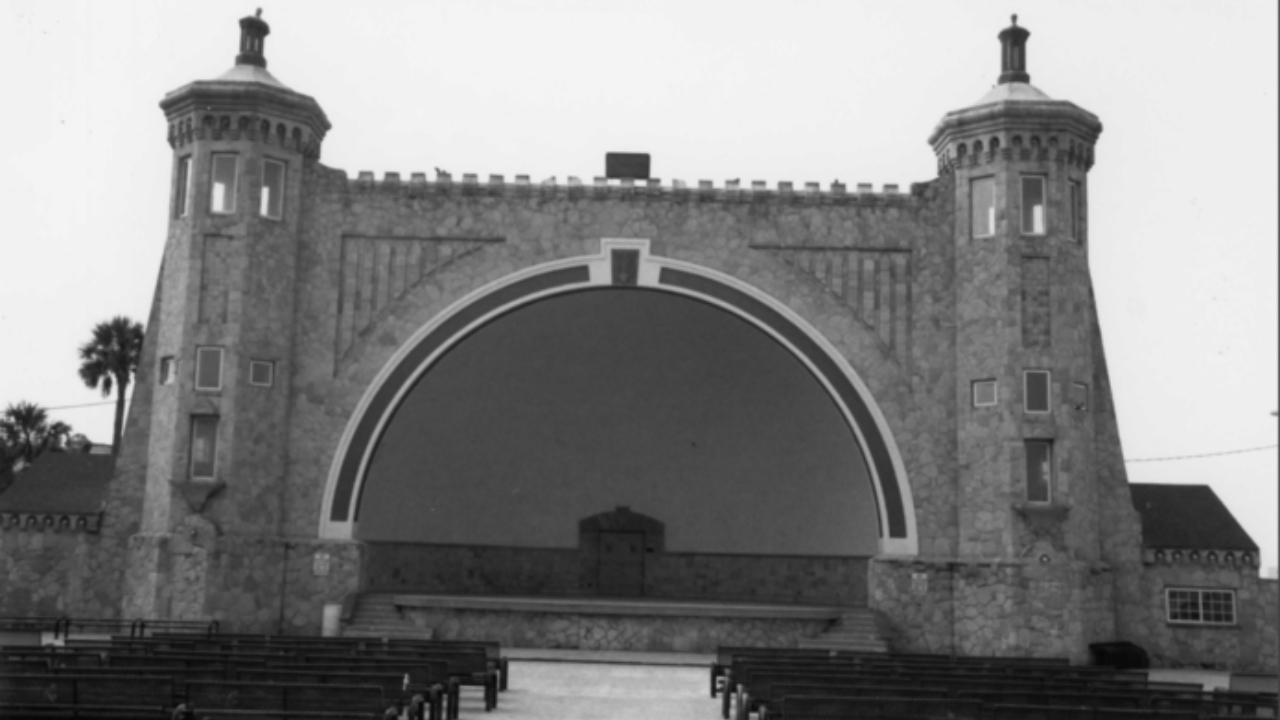
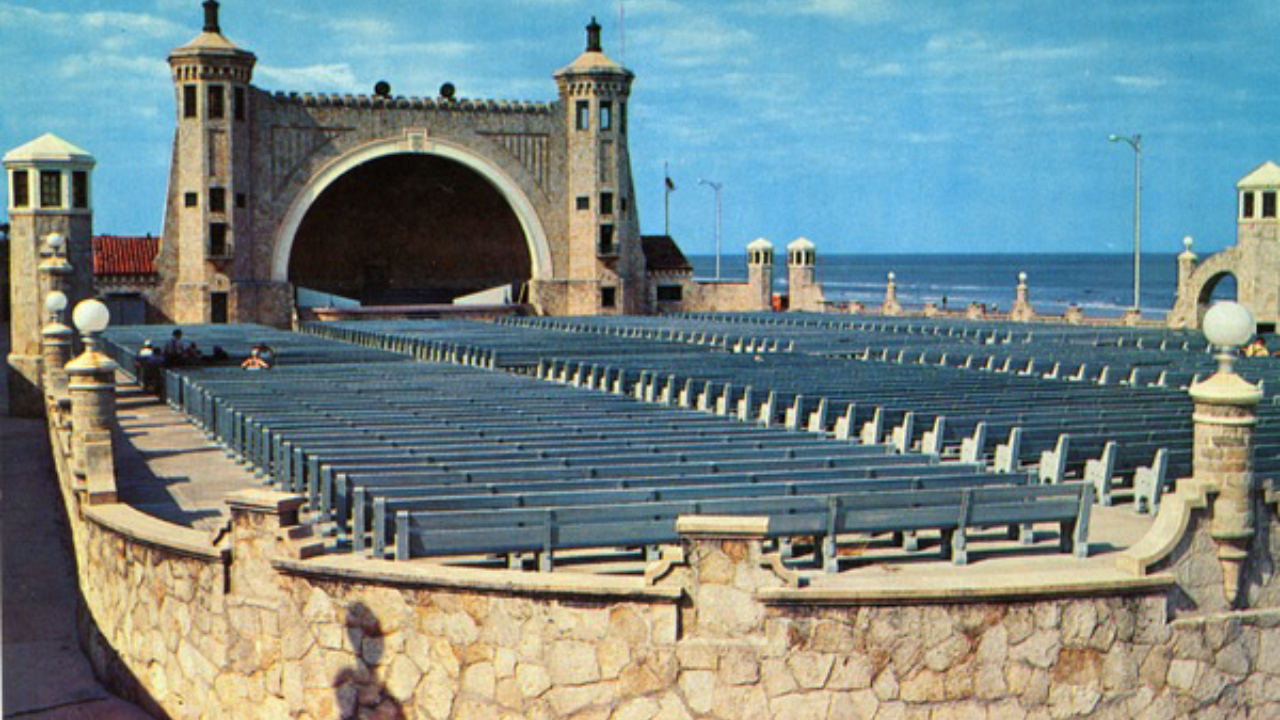
Just steps away, the historic Daytona Beach Bandshell, built in 1937 as part of a New Deal project, has echoed with the sounds of concerts, festivals, and seaside celebrations for nearly a century.
Together, they continue to celebrate the spirit of the arts, community, and timeless entertainment.
Venues History

Peabody Auditorium
Mission Statement
The Peabody's mission is to play a vital role in the arts in Central Florida, to provide diverse cultural activities accessible to all, and to improve the quality of life of our citizens by serving as a partner to social and economic development, rejuvenating neighborhoods, supporting local businesses, promoting education and voluntarism, and establishing and sustaining an inviting gathering place for citizens to celebrate a shared human and cultural experience.
History
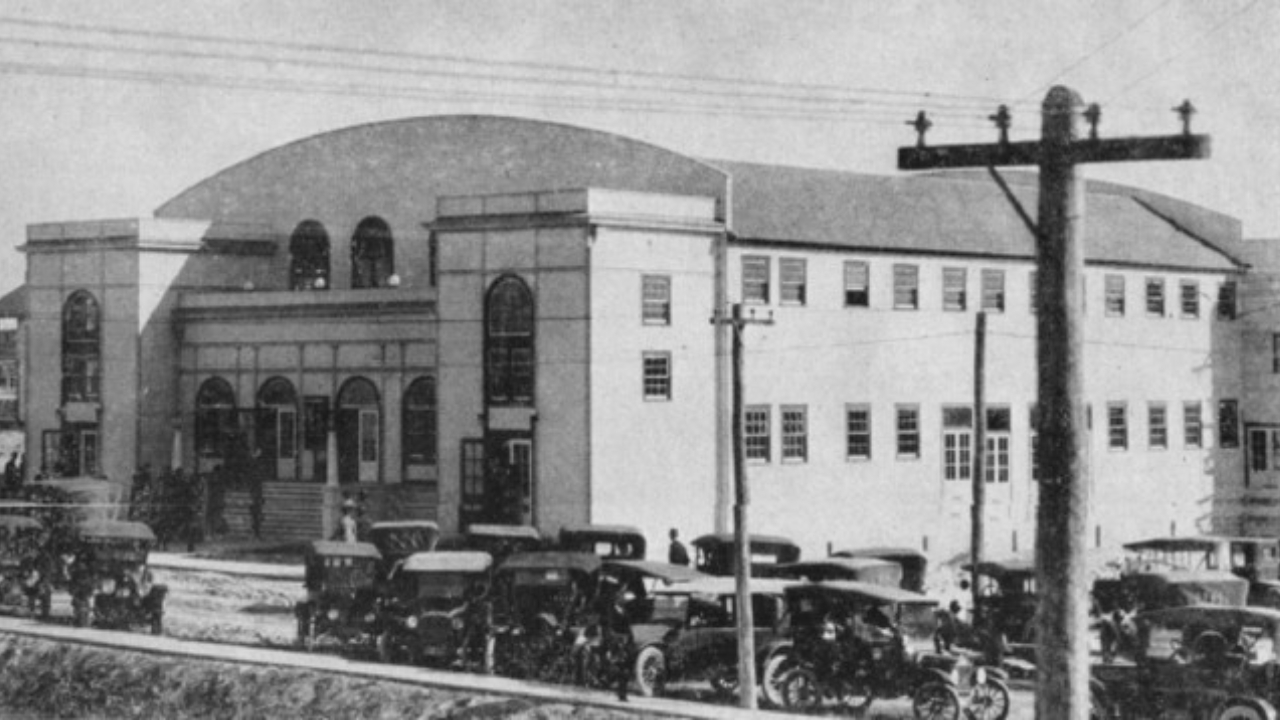
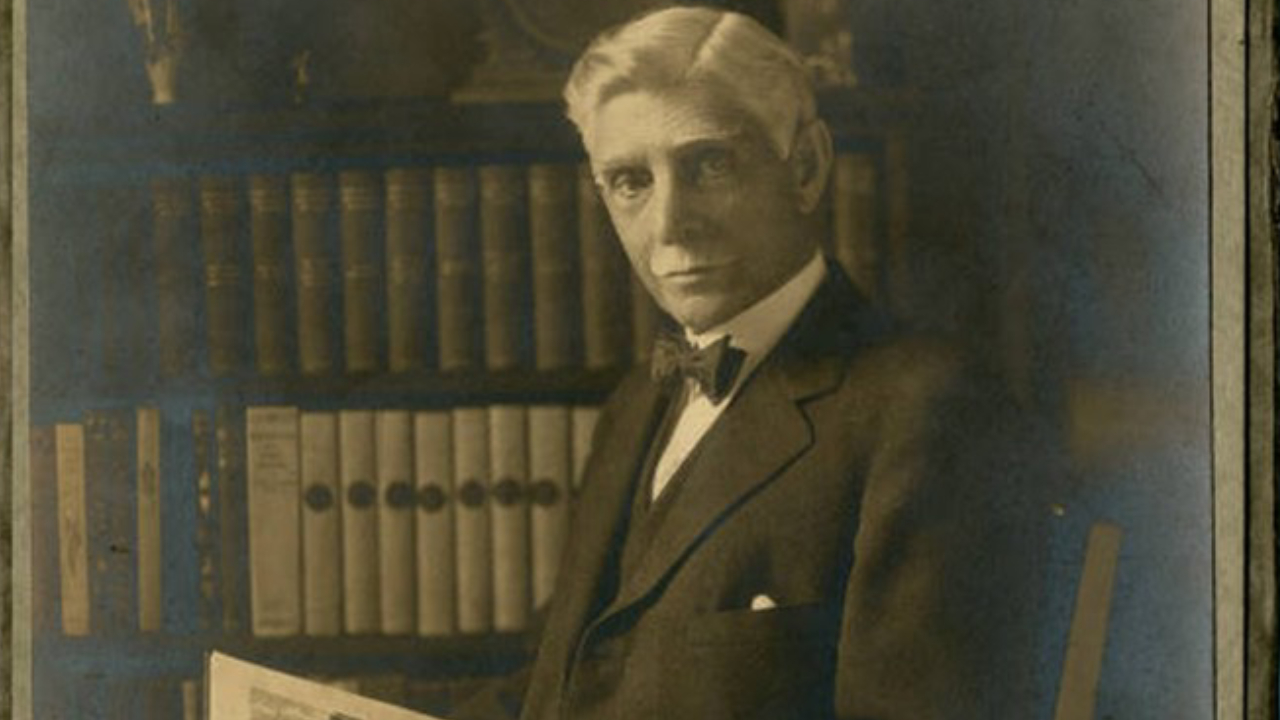
Simon J. Peabody, a successful businessman who called Daytona Beach home from 1907 until 1933, founded the original Peabody Auditorium. The original frame structure, a 2,200-seat auditorium, was constructed on property donated by Mr. Peabody in 1919. Sergei Rachmaninoff, Paderewski, and the John Philip Sousa Band were among the early performers in the theatre before it was destroyed by the largest fire on record in Volusia County, Florida.
In the Fall of 1947 construction began on the new performing arts center with an emphasis on function and fireproofing. The rebuilt Peabody Auditorium has double reinforced fire brick construction throughout, guaranteeing that the fate of the first structure would never be repeated.
The Peabody Auditorium has hosted legends like Frank Sinatra, Elvis Presley, Liza Minnelli, and B.B. King, along with top Broadway shows like Cats, Rent, and Chicago. The Peabody Auditorium was also the summer home of the London Symphony Orchestra for 40 years and the Daytona Beach Symphony Society for over 70 years.
Peabody Auditorium Historical Highlights
- 1919: Original structure is built and opens to the public as a community cultural venue.
- 1946: Building is destroyed by a fire, prompting plans for reconstruction.
- Fall 1947: Construction begins on the new auditorium building.
- 1948: A time capsule is placed in the cornerstone, to be opened in 2048.
- October 6, 1949: The new auditorium is officially dedicated with an inaugural performance by the U.S. Navy Band.
- March–April 1950: Major national acts appear, including Harry James & His Music Makers, Nelson Eddy, Sigmond Romberg & Concert Orchestra, and Jeanette MacDonald.
- 1952: The Daytona Beach Symphony Society is established as a nonprofit committed to bringing world-class music and cultural programs to the community. For over 70 years, the Peabody Auditorium proudly served as its home.
- 1955–1956: Elvis Presley performs three times, marking early appearances in his rising career.
- 1958: Buddy Holly performs, adding to the venue’s legacy of legendary acts.
- 1966: London Symphony Orchestra performs twice, beginning a long-standing relationship with the Peabody Auditorium.
- 1968–1974: The Animals, The Beach Boys, The Allman Brothers Band, Muddy Waters, REO Speedwagon, Country Joe and the Fish, and Gordon Lightfoot perform during a prolific era for live music.
- 1974: Major building renovations include replacement of the roof and HVAC system, and the addition of two dressing rooms.
- 1982–1985: Widespread refurbishments include improved seating, carpeted aisles, upgraded lighting and rigging, new sound system, and lobby HVAC installation.
- 1989: The Atlantic Room opens as a new addition. A stage expansion project adds 30 feet to the back wall, 20 feet of fly space, and 10 feet to the orchestra pit; under-stage storage also added.
- 1990s: Iconic performances continue with appearances by Sammy Davis Jr., Anne Murray, Rita Moreno, Paul Anka, Mitzi Gaynor, Marvin Hamlisch, and Debbie Reynolds.
- 1991: The stage floor is replaced to accommodate increased performance demand.
- 1994–1995: The venue hosts major touring productions including Best Little Whorehouse in Texas and Will Rogers Follies.
- Early 2000s: Legendary artists like Willie Nelson, Tom Jones, The Temptations, and BB King, alongside major Broadway tours such as Cats, Chicago, and Beauty and the Beast performed. The venue also hosted top orchestras, acclaimed comedians like Jeff Dunham and Jerry Seinfeld, and annual favorites like The Nutcracker Ballet.
- 2019: The stage is completely rebuilt, featuring new materials, improved infrastructure, and modern design to meet the demands of current professional touring productions and enhance performance quality.
- 2020: Theatrical lighting was upgraded.
- 2021: Audio system is upgraded to meet modern technical standards and improve audience experience.
The Peabody Auditorium Today
Today, the Peabody Auditorium remains a vital cultural hub in Daytona Beach. With over 2,500 seats, the venue hosts 50-60 events per year, drawing more than 100,000 attendees from across Central Florida and beyond. Now operating exclusively as a rental-only venue, the Peabody Auditorium collaborates with event promoters world-wide to bring top-tier Broadway shows, legendary musicians, ballets and symphonies, comedy acts, competitive arts, and educational programs to our stage. Artists including Patti LaBelle, Styx, Gladys Knight, Ron White, Tom Segura, Kool & the Gang, Frankie Valli and The Four Seasons, and many more have taken the stage.
Operated by the City of Daytona Beach’s Arts & Entertainment division, the Peabody Auditorium plays a key role in enriching local culture, supporting community development, welcoming diverse audiences, and serving as a gathering place that fuels social and economic growth.
Daytona Beach Oceanfront Bandshell & Park
History
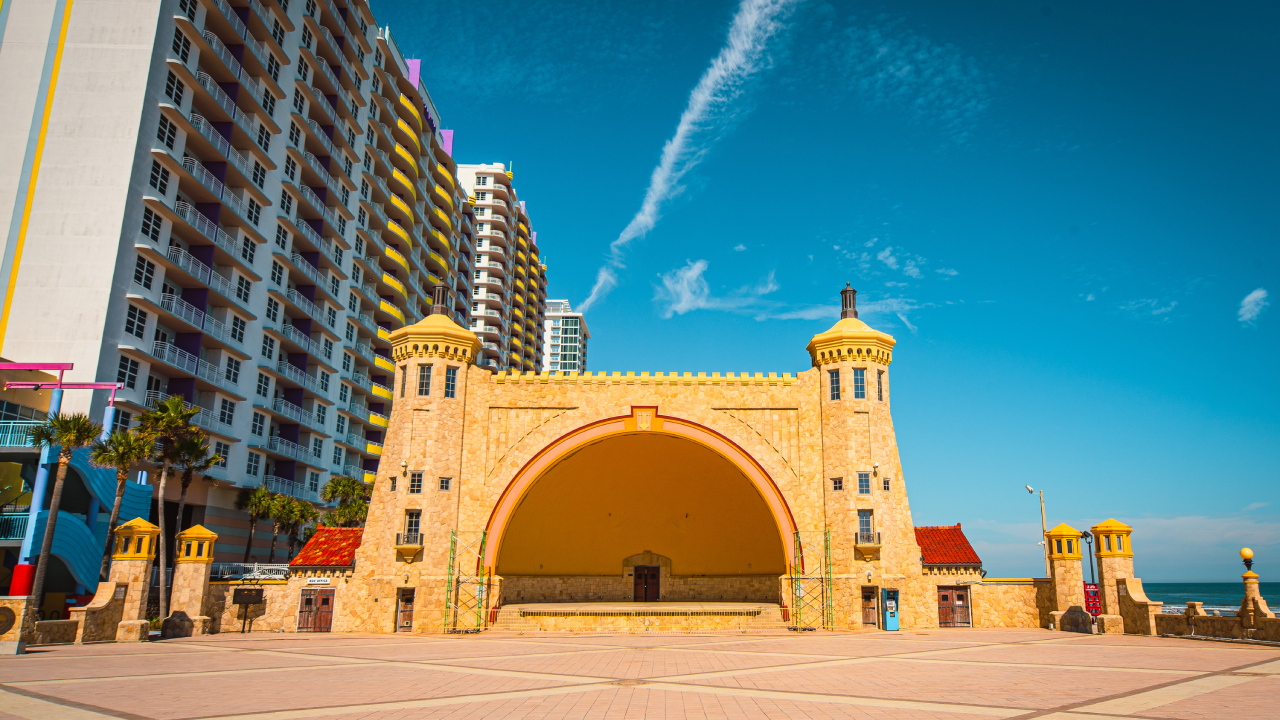
In 1934, led by Mayor Edward H. Armstrong, Daytona Beach officials began lobbying for federal support to build a grand outdoor amphitheater. After two years of negotiations and a financial commitment from the city, the project was approved in 1936 under the Works Progress Administration (WPA), costing the city $84,000 and the Federal Government $184,000.
Architect Alan J. MacDonough, known for his experience with large-scale buildings, designed the Bandshell using local coquina stone. MacDonough featured the stone in many of his subsequent designs, including the Bandshell, boardwalk, promenade, and park system in Daytona Beach and the Holly Hill Municipal Building. The coquina used for the facing of the Bandshell came from a quarry in the neighboring community of National Gardens.
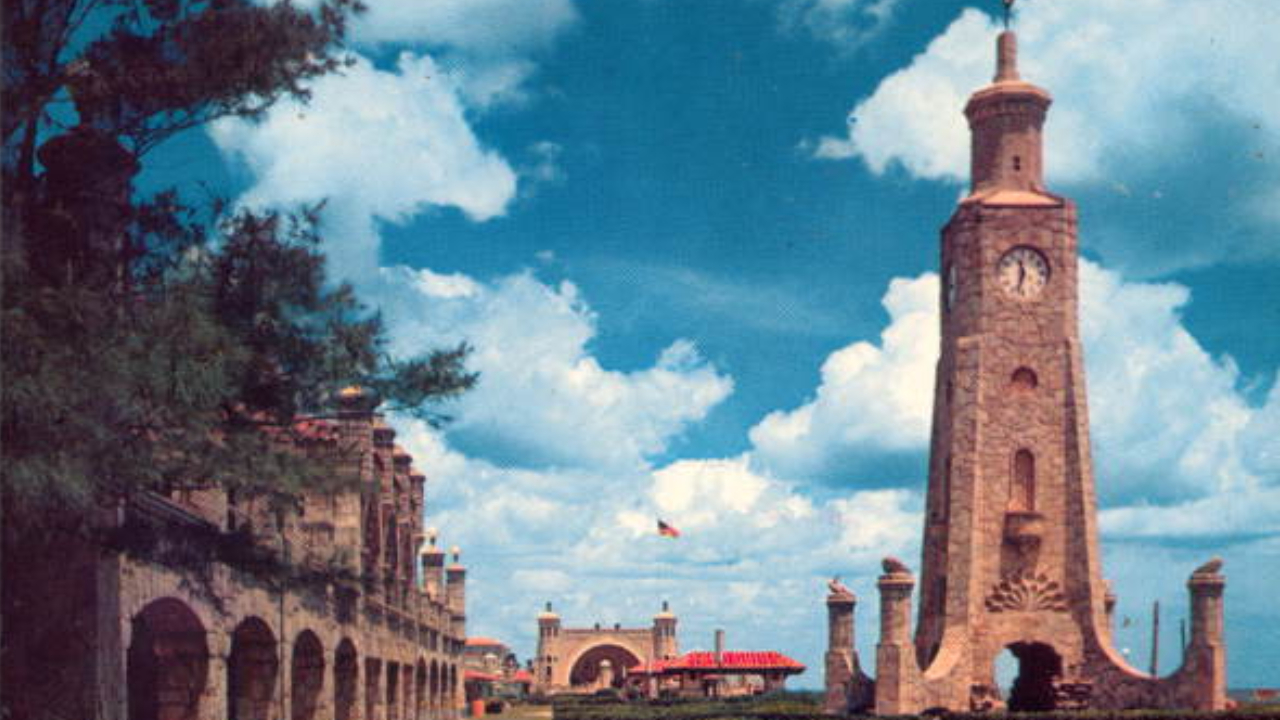
MacDonough's plans for the creation of the complex transformed a run-down stretch of beachfront into a large bandshell and amphitheater, a sixteen-foot-wide promenade, a clock tower, a series of sunshade kiosks, a line of small shops and concession stands, and a concrete "boardwalk," which was to connect with a similar promenade to the south, which the city had been erecting along the beach front in stages since 1929.
Oceanfront Park & Coquina Clocktower
The Daytona Beach Coquina Clock Tower and fountain is located south of the Daytona Beach Oceanfront Bandshell. The clocktower and fountain have been a symbolic landmark for the "World's Most Famous Beach" since 1937. The unique design of the clock face that features the letters D-A-Y-T-O-N-A-B-E-A-C-H instead of twelve numerals is 55 feet high. Built from native Florida coquina that was quarried locally, the clock tower is one of many iconic photo ops throughout the Daytona Beach area.
The Oceanfront Park is available to rent for outdoor receptions, group activities or various other events. Visit our Non-Ticketed Venue Rentals page for more information.
Oceanfront Bandshell Historical Highlights
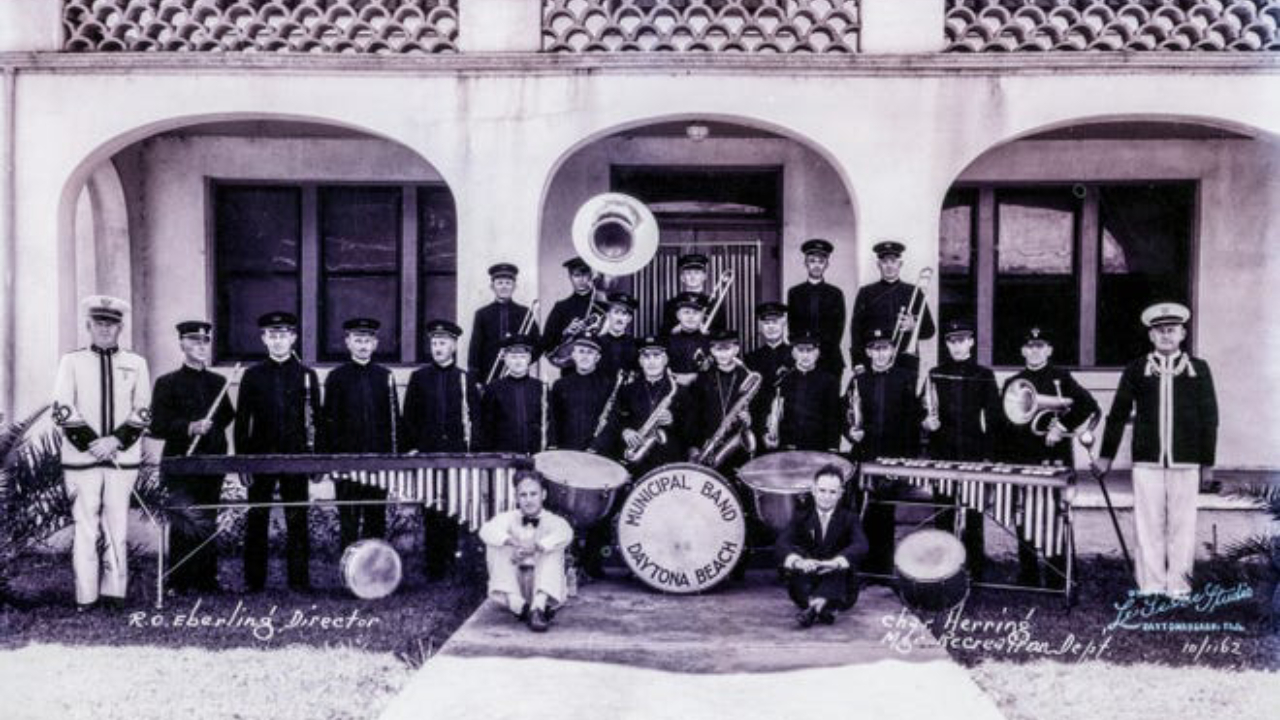
- 1937: Daytona Beach Bandshell and Oceanfront Park officially open on July 1 with a concert by the Daytona Beach Municipal Band attended by 3,000 people.
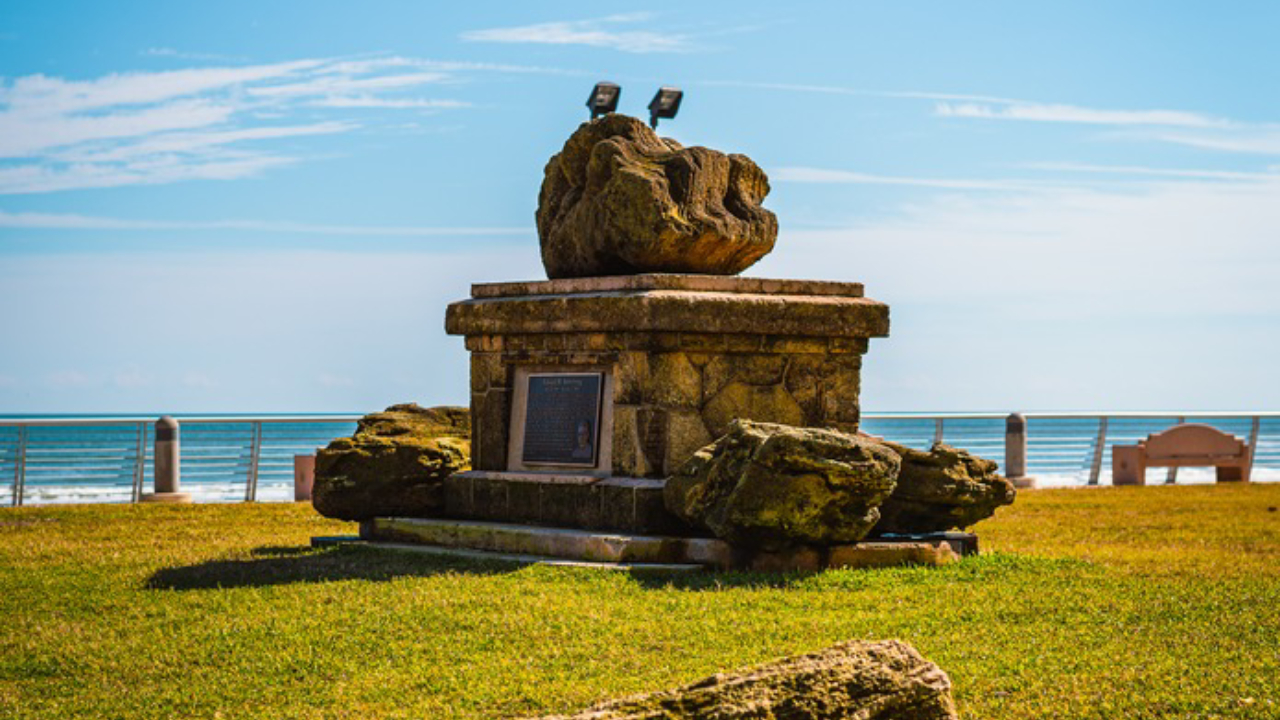
- 1938: Oceanfront Park officially dedicated on January 1. WPA workers build a monument honoring Mayor Edward H. Armstrong.
- 1947 & 1967: Hurricanes cause significant damage to the Bandshell and boardwalk.
- 1974: Major renovations include roof replacement and removal of original benches.
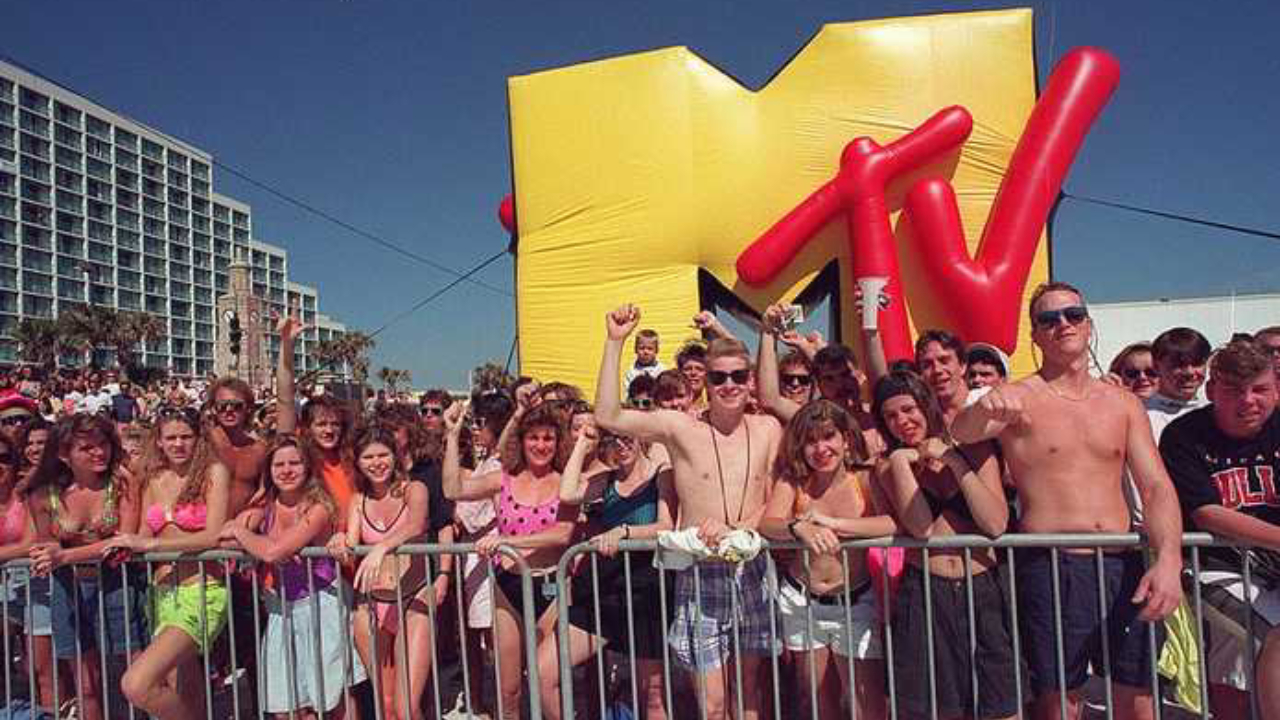
- 1986–1993: MTV hosts Spring Break concerts at the Bandshell, featuring artists like Starship and Mr. Mister.
- 1996: Friends of the Bandshell nonprofit forms to restore the venue and offer free concerts.
- 1997–2000: The City of Daytona Beach received multiple grants to repair and improve the entire Bandshell/Clocktower area. The City of Daytona Beach restored the Bandshell with the Historic Renovation Grant. During this restoration, air conditioning was installed and the entire inside of the Bandshell was renovated including the dressing rooms and bathrooms.
- 1999: Daytona Beach Bandshell and Oceanfront Park is added to the National Register of Historic Places.
- 2002: The first phase of the Daytona 200 Monument, located on the beachside of the Daytona Beach Hilton-Ocean Walk Village was dedicated to the city and accepted by the Mayor of Daytona. Visit https://daytona200monument.com/ for more information.
- 2003–2010: Big-name acts like Kenny Chesney and Blake Shelton perform at the Bandshell.
- 2014: Due to water intrusion, broken roof tiles and numerous distresses, the Bandshells clay tile roof is replaced with new through-wall flashings.
- 2015: The Ritchey Plaza is formed and named after one of the City of Daytona Beach’s beloved mayors, Glenn Ritchey. The plaza, located adjacent to the Bandshell, serves as a city landmark that honors Ritchey’s public service, love of music and civic-minded contributions with a unique renovation. Construction is completed on the newly added Bandshell Box Office.
- 2017: City officials approve $1 million-dollar interior overhaul of the Bandshell. The project involved adding more energy efficient technology; replacing architectural elements, electrical, heating, ventilation, and plumbing fixtures; painting and replacing all interior flooring.
- 2020: Edward H. Armstrong Plaque is installed: On July 2, 2020, city workers installed a plaque honoring Daytona Beach’s Depression-Era Mayor.
The Daytona Beach Bandshell Today
The Daytona Beach Oceanfront Bandshell remains a beloved landmark, alive with vibrant, free live music almost all summer long. Each year, thousands gather for the Sounds of Summer Concerts Series on Friday nights (running from late May through August) and the Star‑Spangled Summer Concert Series on Saturday nights (running from late May through September). Both series feature electrifying tribute acts and the Saturday night series offers a spectacular fireworks display over the ocean after each concert.
Separate from the free concert series, national touring artists such as Brian Kelley, Chase Rice, La India, The Red Hot Chili Pipers, Taylor Dayne and Tiffany, and many more have taken the Bandshell stage.
Beyond concerts, the Oceanfront Park area offers a scenic, family-friendly space perfect for relaxing or enjoying live entertainment. The park features ocean views, a volleyball court, and direct access to the Daytona Beach Boardwalk.